
PRODUCT CASE STUDY · EDUCATION · STUDENT DEVELOPMENT
Preparing for
what comes next.
Repositioning a premium student-development platform around the questions families actually ask: what should my child focus on now, and how does it build toward their future?
Visit Kate Stone Prep ↗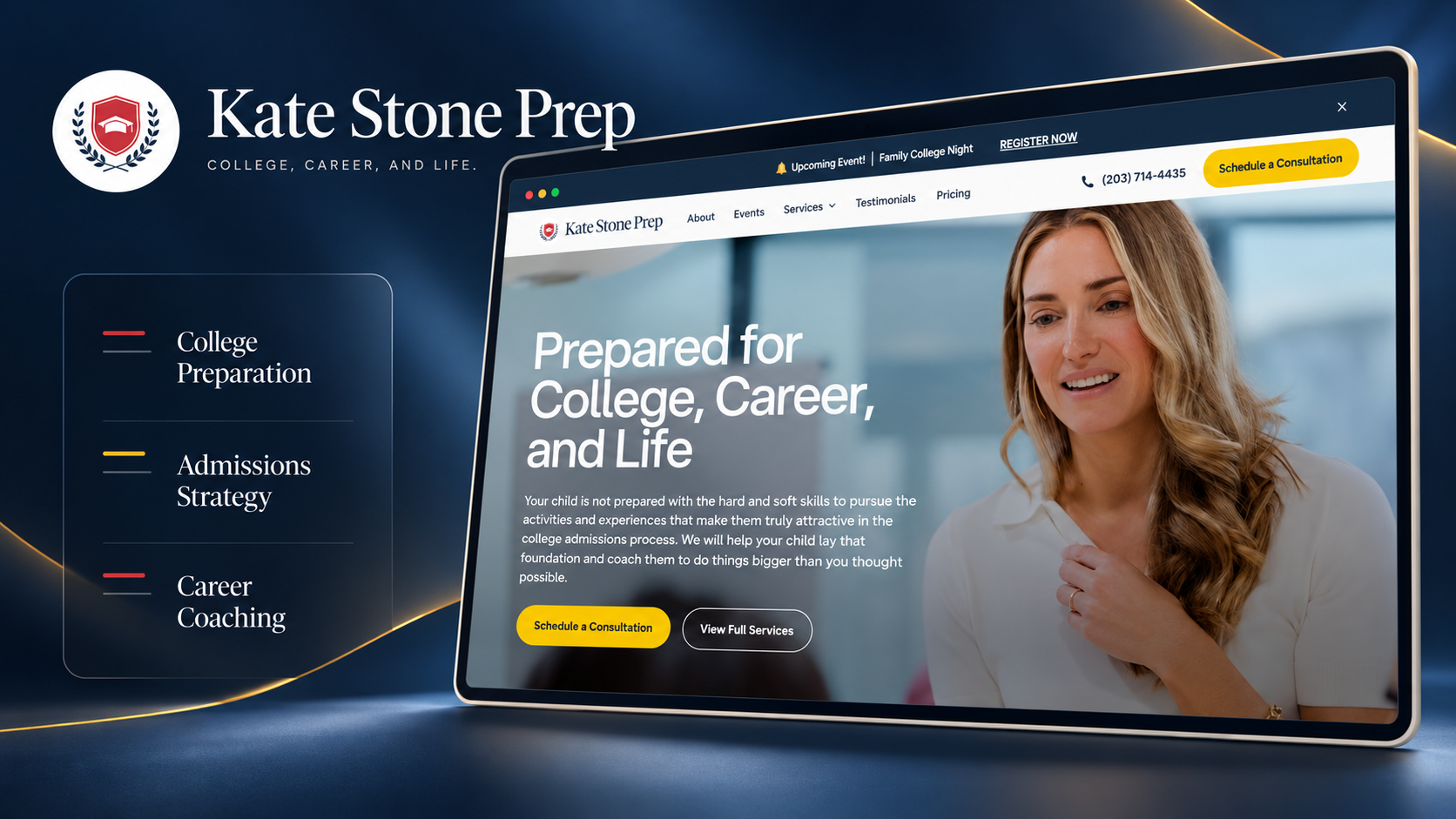
PROJECT OVERVIEW
From college prep to a longer view of student growth.
Kate Stone Prep is a student-development and college-preparation platform for families. Its support spans academic advancement, extracurricular planning, college admissions, sports recruiting, and career coaching—from middle school through high school and into college.
The work transformed the former University Gurus website into a more structured, premium digital experience under the Kate Stone Prep brand. I helped shape the website as a product: aligning brand positioning, information architecture, service presentation, user journeys, and conversion paths with the business’s broader offering.
Help families understand the full range of support, identify a relevant path for their student, build confidence in the approach, and take a clear next step.
THE CHALLENGE
The offer had grown. The digital story needed to catch up.
The existing University Gurus experience did not fully communicate the breadth, structure, or long-term value of the service. Families could encounter a broad range of support without a clear way to understand what each programme included, how services fit together, or what made sense for their child’s stage.
Make the new identity clear
Establish Kate Stone Prep as a premium, cohesive student-development brand through the transition from University Gurus.
Explain a broad offer
Make programmes and their relationship to a student’s development easier to explore and compare.
Reflect different starting points
Help families browse by a known need or by their child’s grade and stage.
Make the next step feel clear
Connect service and pricing information to consultation booking, enquiries, and event registration.
Support content updates
Give the team a manageable way to publish recurring events, testimonials, and articles.
Prepare for mobile and search
Strengthen responsive layouts, SEO structure, accessibility considerations, and migration readiness.
USERS & NEEDS
Start with a family’s question, not the company’s org chart.
The primary audience is parents and families looking for structured guidance. Students are a secondary audience, with needs that change substantially across grade levels. The experience needed to make the service understandable to both.
Parents and families
- Understand how to prepare for competitive college admissions.
- Find meaningful extracurricular opportunities and interests.
- Build a long-term academic and personal-development plan.
- Understand programme value, investment, and who to speak with.
Students
- Advance academically and prepare for exams.
- Explore admissions strategy, research, and independent study.
- Develop extracurricular profiles or pursue sports recruitment.
- Prepare for internships, networking, and early career opportunities.
“What should my child be doing at this stage to prepare for the future?”
The grade-based journey was designed to help answer that question.PRODUCT STRATEGY
Two ways to find a path through the same service ecosystem.
We organized exploration around two complementary entry points. Families who already knew the kind of help they needed could browse by service. Families still figuring out where to begin could browse by the student’s grade.
Explore by service
For visitors arriving with a specific need in mind.
Explore by grade
For visitors looking for guidance on what comes next.
The structure supports different levels of user awareness without splitting the underlying offering into disconnected experiences.
KEY EXPERIENCES
A connected journey from first visit to a useful conversation.
The experience moves from discovery and understanding to trust and action. Each page type has a job in that journey.
01Grade-based development pagesStudent pathways
Pages explain development priorities by grade, including planning, academics, extracurricular opportunities, programme components, coaching approach, deliverables, FAQs, and relevant consultation calls to action. A long-term roadmap connects individual activities to the student’s broader academic and professional journey.
02Service pagesOffer clarity
Dedicated experiences explain the purpose, value, and relevant programme components for college preparation, admissions strategy, sports recruiting, academic advancement, exam preparation, and job and career coaching. Each page gives a more specific view of how the service supports the student’s goals.
03Pricing and consultationConsideration to enquiry
The pricing experience clarifies that grade-based programme amounts describe the total investment from the student’s entry grade through college, rather than an annual fee. A consultation form sits alongside pricing so a family can ask questions and discuss fit. Guaranteed Job Placement uses an enquiry-led approach because the appropriate service and investment depend on the client’s needs.
04Events and registrationEngagement
An events landing page and dedicated event pages—including Family College Night and Essay Workshop—create another way for families to engage. CMS-managed event information supports publishing, while registration captures attendee details and is designed to support confirmation and notification workflows.
05Testimonials, stories, and resourcesTrust and discovery
A dedicated testimonials experience and student success stories make family feedback more visible. Blog and resource content gives families useful educational material and gives the team a repeatable publishing structure. These experiences connect back to pricing and consultation actions.
DELIVERY & IMPLEMENTATION
Coordinate the system behind the pages.
I worked across product strategy, stakeholder alignment, experience planning, design and development coordination, conversion logic, and quality assurance.
Clarify the structure
Translate business objectives into product goals; shape page hierarchy and service- and grade-based navigation; connect services, pricing, events, and consultations.
Make decisions actionable
Gather stakeholder requirements, communicate recommendations and trade-offs, and align design and development partners around expected experiences.
Fit the real process
Shape consultation and enquiry experiences, calls to action, and lead-management requirements, including HubSpot and Zapier workflow considerations.
Design and technical foundations
- Designed in Figma and implemented in Webflow with responsive layouts and reusable styling.
- Planned CMS collections for recurring blog articles, events, and testimonials.
- Defined integration requirements for HubSpot lead management, Zapier automation, event registration notifications, and consultation scheduling.
- Established SEO requirements: unique titles and descriptions, Open Graph metadata, canonical URLs, semantic headings, image alt text, sitemap, robots.txt, schema considerations, and descriptive URLs.
- Included a 301 redirect map for the University Gurus to Kate Stone Prep migration, alongside SSL and domain configuration requirements.
- Considered AVIF image optimization, responsive imagery, readable content, and clear mobile calls to action.
Quality assurance focus
DELIVERABLES
A clearer digital foundation for the expanded offering.
The documented outcome is a set of product and website deliverables. No measured increases in traffic, leads, or revenue were supplied, so this case study makes no performance claims.
- A new digital experience under the Kate Stone Prep brand.
- Service-based and grade-based navigation across the student journey.
- Dedicated service and grade pages, including a long-term roadmap concept.
- A pricing experience that explains long-term programme investment and supports enquiry.
- Consultation, event registration, testimonials, student story, and resource experiences.
- A CMS structure for recurring content, plus responsive layouts and SEO/migration foundations.
These are project and product deliverables, not independently measured business results.
REFLECTION
Product management is also deciding how the story holds together.
This project applied product thinking to a complex service business: understand its model and audiences, then make the value easier to find, understand, and act on.
Information architecture shapes how people understand and evaluate an offer.
Good conversion flows reflect the real business process behind the form or call to action.
Stakeholder requests need to be weighed against user needs, business goals, feasibility, and long-term quality.
Reusable components and CMS structure make future content operations more manageable.
MY PRODUCT APPROACH
Understand the problem. Explain the trade-offs. Guide the team toward useful outcomes.
NEXT PROJECT
SupportBox↗Back to all selected work